Norco Dry Rot Repair
Dry rot never starts at random. It begins where water sits against wood and cannot dry out, then spreads quietly under paint that still looks fine from the yard. Ben opens up the soft spots on Norco houses, decks, barns and covered tack areas, finds whatever has been feeding the moisture, and replaces the damaged members with rated lumber before anything gets primed and painted again.
Where Water Sits, Wood Goes Soft
Decay fungi need wood, air and steady moisture. The first two are always present, so every rot repair we do in Norco comes down to finding where the third one collects. On most homes and decks that is a short list of places, and the damage is almost always worst exactly where water lands and lingers.
Rim boards on a deck catch splash and hold it along their top edge. Post bases sit on concrete or dirt and pull moisture up through the end grain. Fascia ends at the corners of a roof take whatever the gutter misses. The ledger line above a sliding glass door, where a balcony or patio cover ties into the wall, stays wet any time its flashing is missing or has failed.
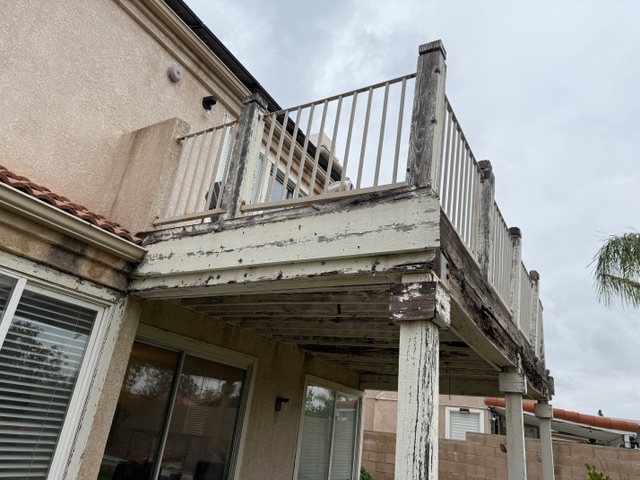
The balcony in that photo shows several of those spots at once: paint lifting off the rim boards and posts, bare gray wood underneath, and darker, softer-looking wood down where the posts meet their bases. A pattern like that tells us where to start probing and which way the water has been traveling.
Peeling Paint Over Wood That Gives
Paint hides rot well. A coat that still looks intact from the patio can be holding together a board that has already gone soft behind it, and a fresh coat brushed over a problem area buys a season at most before it blisters and flakes again. Peeling in one spot while the paint around it holds is often the first visible sign that water is getting into the wood right there.
We check those spots with a probe and our hands, since a look from the ground misses most of it. A screwdriver tip that sinks easily, wood that breaks into small cubes or snaps short across the grain, and a dull thud when the board is tapped all point to decay. We then test the members next to the obvious damage, because rot rarely stops at the edge of the peeling.
Wherever we find soft wood, we mark how far it runs before anyone starts cutting. That keeps the repair scope clear to you up front, and it keeps a small job from quietly turning into a large one halfway through.
Shut Off the Water Before Cutting Any Wood
Replacing rotted wood without stopping the water just schedules the same repair again. So before new lumber goes in, we find the source. On Norco properties the usual culprits are irrigation heads that spray the house or deck every morning, gutters that dump straight onto a beam or post, hose bibs mounted where every use splashes the siding, and missing flashing over ledgers and windows.
Large lots tend to come with large irrigation systems, and one misaimed head can soak the same corner of a porch post for years. A downspout emptying onto a deck beam does the same damage from above. Some fixes are quick, like turning a sprinkler head or extending a downspout. Others call for flashing, a drip edge, or moving a hose bib, and we tell you which ones apply before quoting the wood.

Work up at a second-floor line, like the house pictured here, follows the same order every time. Open the trim, find where water got in, fix that path, and only then close everything back up.
New Lumber or Epoxy Filler
Filler has a place. A small soft area in a piece of trim or a window sill that is otherwise sound can be dug out, hardened with consolidant, filled and painted, and that repair will hold up. What filler cannot do is carry weight. A rotted joist, beam, post or rim board is a structural member, and once it has lost its strength the only honest repair is to take it out and put in new lumber rated for the load.
Filler can shape a sill. It cannot hold up a balcony.
Every Norco job follows the same dry rot repair sequence: shore the structure where needed, cut back to sound wood, install properly rated replacement members, and fasten them with hardware made for exterior exposure. Posts in contact with the ground get treated lumber and metal bases that keep their end grain off the concrete.
When rot reaches framing behind stucco or siding, the wall surface comes off far enough to reach solid wood. It goes back on with flashing that sends the next storm away from the repair.
Barns, Tack Areas and Covered Stalls
Wood on horse property takes a harder beating than a house ever does. Barn posts stand in bedding and wash water, stall boards get splashed whenever they are hosed down, and manure holds moisture against the lowest boards for days at a time. Covered tack areas and run-in shelters often have posts set straight into the dirt, and those rot from below while the roof overhead still looks fine.
We repair these structures the same way we repair a home. Find where the water collects, replace what has lost strength, and lift new post ends off the ground on concrete and metal bases wherever the layout allows. On the lowest, hardest-used boards we can add a replaceable kick board, so future damage lands on a piece meant to be swapped out.
Each repair finishes with sealing and paint. New lumber gets its end grain sealed and is primed on every face before it goes up wherever possible, then painted to match, so the fresh wood starts out protected instead of waiting a season for its first coat.
Norco Projects That Often Follow Rot Repair
Our Norco page covers all of our work in town. These are the projects that tend to come up once the rot is out.
Dry Rot Questions From Norco Homeowners
What causes dry rot on a house or deck?
Wood that stays damp long enough for decay fungi to grow. In practice that means irrigation spray, gutters and downspouts emptying onto wood, hose bibs splashing siding, and missing flashing over ledgers and windows. Stop the water source and the rot stops spreading, which is why we always start there.
Can dry rot be repaired with filler instead of new wood?
Small soft spots in otherwise sound trim or sills can be cut out, hardened and filled, and that repair holds. Filler cannot carry a load, though. A rotted joist, beam, post or rim board has to come out and be replaced with rated lumber to get its strength back.
How far does rot spread past what I can see?
Usually farther than the paint suggests. Decay follows moisture along the grain and into neighboring members, so we probe beyond the visible damage before setting the scope. Ben marks how far it runs and shows you, so the quote covers all of it and not only the obvious part.
Do you repair rot in barns and horse structures?
Yes. Barn posts, stall boards, run-in shelters and covered tack areas see wash water and manure that keep wood wet. We replace failed members, lift post ends off the ground on concrete and metal bases where possible, and can add replaceable kick boards where the wear is heaviest.
Will paint keep dry rot from coming back?
Paint helps by shedding water, but only when every face, edge and end of the new wood is sealed and the moisture source has been fixed. Painting over damp or soft wood traps water inside it. We seal and paint after the repair, once the cause is dealt with.
Can you fix rot above a sliding glass door?
Yes, and it is one of the most common places we find it. Water gets behind a ledger or trim board above the slider when flashing is missing. We open the wall surface, replace the rotted framing and ledger, install flashing, and close it back up with matching trim and paint.
Free Norco Dry Rot Quote
Ask for Ben when you call.
(909) 227-4193 Or send close photos of the soft spots along with a wider shot of where they sit on the house, and we will reach back out before the visit. Send Photos for a Free QuoteRot Repairs and Rebuilt Trim From Past Jobs
Replaced beams, posts, fascia and trim on jobs across Riverside County.