Custom Deck Building
Complete deck builds from the first walk of your yard to the final inspection card. Design, engineering, permits, footings, framing, stairs, and railings, all handled by one contractor who has been doing it here since 1990.
One Contractor, Start to Finish
A deck build is a structural project. It starts with soil and setbacks and ends with an inspector signing a card, and there are a dozen places in between where a job goes sideways. BPP Construction handles all of it. Ben walks your yard, draws the deck, prepares the plans, pulls the permit, pours the footings, frames the structure, builds the stairs, sets the railings, and meets the inspector at every required stage. You hire one contractor and deal with one person the whole way through.
That matters more than it sounds. Homeowners who split a deck across a designer, a permit expediter, and a framing crew end up refereeing between them when something does not line up. Ben has been building in Riverside and San Bernardino counties since 1990, so the plans he draws are the plans he builds, and if a detail needs to change at the footing stage he adjusts it on the spot instead of waiting on a redraw.
He also knows the counters. Thirty-five years of pulling permits across more than 25 cities in the Inland Empire means Ben knows which building departments want wet-stamped plans, which ones will red-line a submittal over a missing connection detail, and who to call when a review stalls. Those relationships are the difference between a permit that clears in two weeks and one that sits for six.
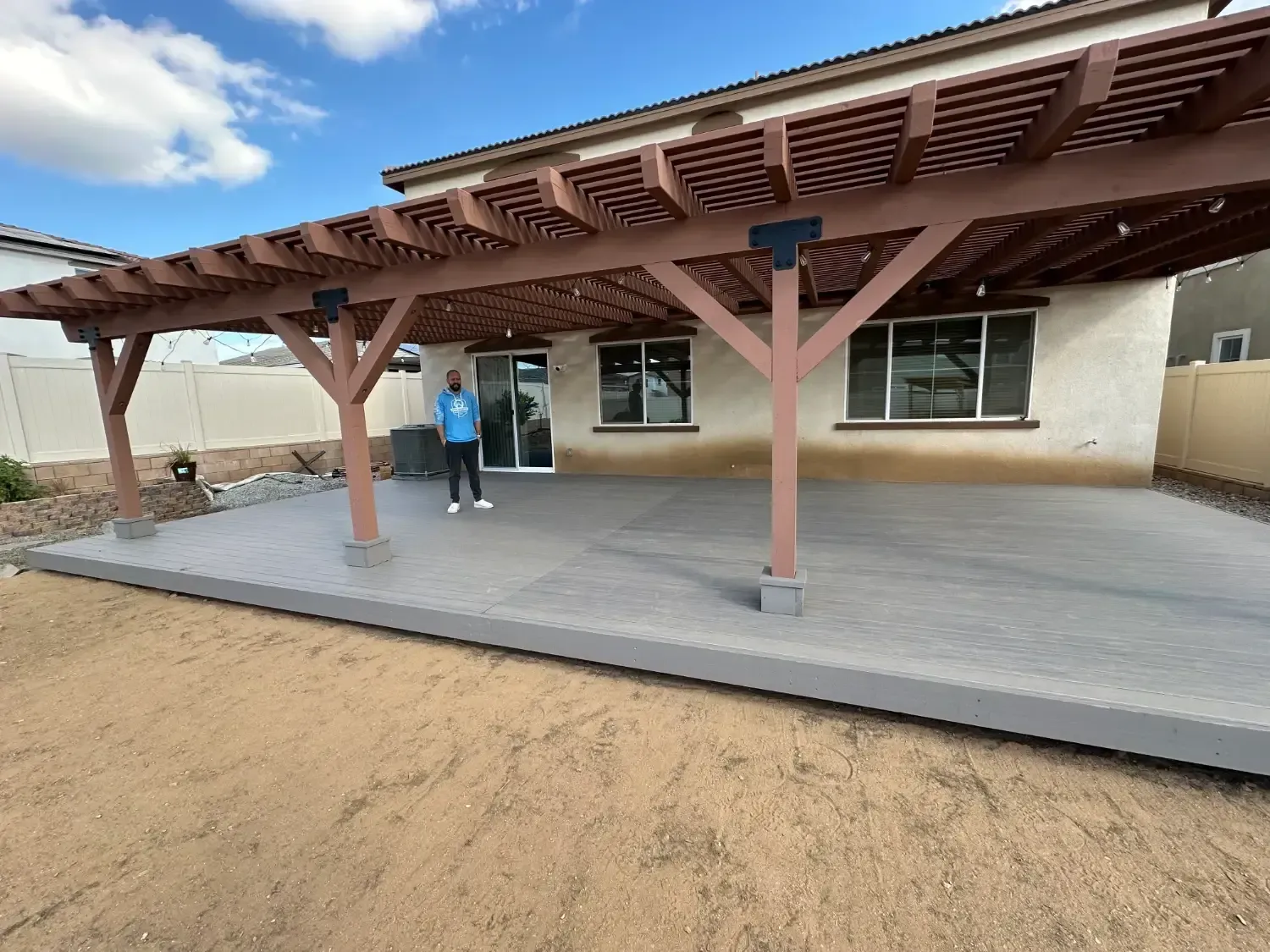
Decks Engineered for California
in the Inland Empire
Guardrail Height
& Inspected
Two Counties
From Design to Final Inspection
The Walk and the Drawing
Ben comes out and walks the yard with you. He checks grade, soil, drainage, where the water goes in a hard rain, how the house framing sits behind the stucco, and where your setback lines fall. Then he draws the deck: footing locations, beam and joist layout, stair placement, railing runs, and the lumber schedule. You see the design and the quote before anything is submitted anywhere.
Plans and the Permit
Ben prepares and submits the permit package himself: structural plans, footing sizes, ledger and connection details, span calculations, and the material schedule, all to current California Building Code. You do not stand in line at a counter or chase a plan checker. When a department comes back with a correction, he answers it directly and resubmits, usually the same week.
Build and Sign-Off
Footings get dug and poured to the engineered spec, then inspected before anything goes on top of them. Posts land on approved bases, beams and joists go in at the spans on the plan, and the ledger gets bolted to real framing and flashed. Decking, stairs, and railings follow. The inspector comes back at framing and again at final, and Ben is on site for both.
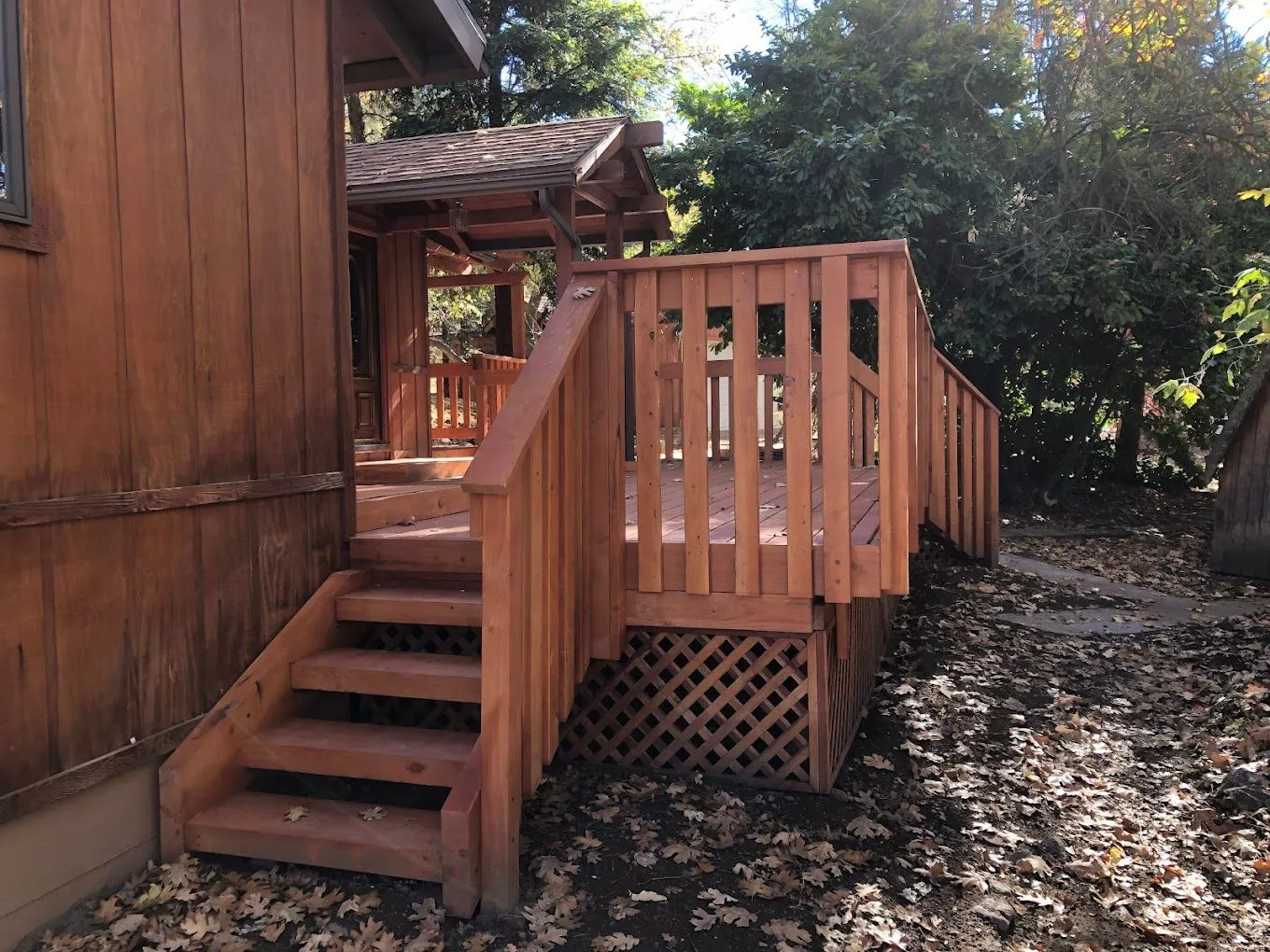
Elevated, Multi-Level, and Everything Under Them
A platform deck near grade is a straightforward build. The projects that separate a deck builder from a handyman are the ones that go up. An elevated deck off a second-story slider carries its load through posts and footings that have to be sized for it, with a ledger bolted into house framing and flashed so water never reaches the band joist. That connection is the single most common failure point in deck collapses nationwide, and it is the detail Ben spends the most time on.
Multi-level decks give you separate rooms outdoors. Dining at the door height, a step or two down to a lounge, sometimes a third landing for a spa or a fire table. Each level needs its own beam line and footings, and the transitions between them have to work as real stairs rather than an afterthought. We build stringers cut to consistent rise and run, treads that stay flat over time, and graspable handrails on every flight, because uneven stair rise is what inspectors catch and what trips people at night.
Railings do structural work. A guardrail post has to resist a 200-pound load applied in any direction at the top, which means it is blocked and bolted into the framing, not lag-screwed to the rim and hoped for. We also build wraparound decks, pool surrounds, and spa platforms, and we frame decks to accept a wood patio cover overhead or an under-deck drainage system below when you want the space beneath a raised deck to stay dry. Choosing between redwood, cedar, pressure-treated, and composite is its own conversation, covered on our wooden decks page.
What Homeowners Add to a Deck Build
Most deck projects pick up one or two of these along the way. Building them at the same time is cheaper and cleaner than coming back later, because the posts, footings, and flashing get planned together from the start.
Finished decks, stairs, railings, and covered outdoor spaces we have built around the Inland Empire are in the project gallery. If you want to talk through a build, the contact page reaches Ben directly.
Deck Building FAQs
Do I need a building permit to build a deck in Riverside, California?
What are the California code requirements for deck ledger board attachment?
What type of footings does California code require for deck construction?
Do you handle the entire deck project, or do I need to hire other people?
Should I build with wood or composite decking?
How long does a full deck build take from start to sign-off?
Have Him Look at Your Yard
Ground-level platform or a three-level structure off a second-story door, the build runs the same way: designed for your lot, permitted through your city, and inspected at every stage. Thirty-five years of doing it in these two counties. Call and get on the schedule.
Book My Deck Walkthrough Call (909) 227-4193Where We Work
Based in Riverside, CA, serving homeowners across Riverside and San Bernardino counties.