Lake Elsinore Wood Exterior Repair
Wood on the outside of a Lake Elsinore house gives out where water sits and sun bakes it: the beam under a balcony, the header over a slider, the fascia along a roof edge. Ben opens up the damage, finds out how the water got in, and replaces what has gone soft with wood sealed so the same spot does not rot again.
A Split Beam Under the Balcony
The beam along the outer edge of a second-story balcony is one of the hardest-working pieces of wood on a house, and one of the least watched. It sits outdoors, catches whatever drains off the deck above, and holds up the joists, the railing and everyone leaning on it. When it starts to rot, it usually shows from below first: paint that bubbles, a dark line along the bottom edge, a crack running with the grain.
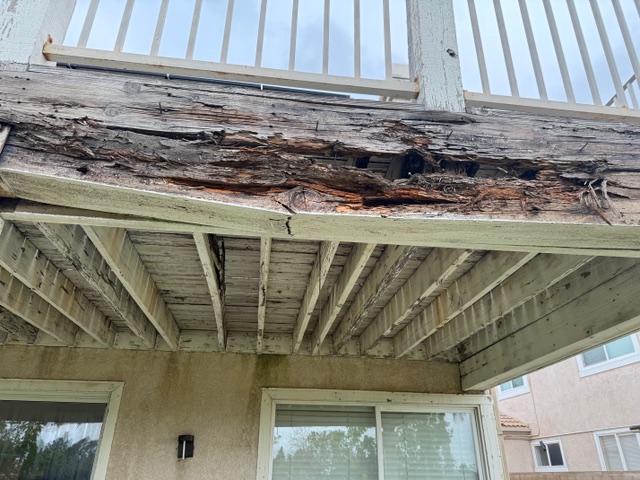
The beam in this photo is well past that stage. It has split lengthwise, with rot running along it. Paint or a patch of filler would hide it without changing what the beam can hold. We shore the balcony first, take the load off the damaged member, and only then cut it out.
How much comes out depends on what we find once it is open. Sometimes the rot stops a few feet in. Sometimes it has traveled into the posts or the ends of the joists, and those get handled in the same visit instead of waiting for next year. If the balcony turns out to be past saving, our Lake Elsinore wood balconies page covers building a new one.
Opening the Stucco Above a Slider
A wide sliding door needs a header or beam over it to carry the wall and floor above, and on a stucco house that wood is out of sight. Water that gets behind the stucco runs down until something stops it, and the top of a door opening is a common place for it to collect. The first signs are usually a stain, a crack in the stucco band, or a slider that starts dragging in its track.
Fixing it means opening the wall. We cut back the band above the doors, expose the beam and its connections, and see how far the damage runs. The photo below shows that stage on a two-story house: the band opened, the metal brackets exposed, ladders and tool cases set out on the patio.

With the wall supported, the rotted wood comes out and the new beam goes in on connectors sized for its load. The flashing over the door head gets rebuilt in the same pass, since that is usually where the trouble began. Then the opening is closed with new paper, lath and stucco, blended to the existing finish.
Tracing the Water Back to Where It Gets In
Replacing rotted wood without stopping the water that rotted it buys a few years at most. So before any new lumber gets cut, we follow the moisture back to its source. On houses here it is usually one of three things.
Flashing
Missing or failed flashing where a balcony, a beam or a door head meets the wall lets water run behind the stucco and into the framing.
Deck surface
A cracked coating or worn planks on a balcony let water soak straight down into the joists and the beam below.
Irrigation
Sprinkler heads aimed at a wall, a post or a fence base keep the wood wet every morning through the warm months.
We also check gutters and downspouts that empty against the house. Probing the wood shows where the damage is worst, and that is usually right below where the water comes in. The repair plan follows from what we find, and the quote lists the source fix as its own line so you can see exactly what it covers.
Damp Ground Near the Lake, Sun Everywhere
Lake Elsinore wears out exterior wood in two different ways depending on where the house sits. Near the shoreline and around the Back Basin, the ground is lower, the water table sits higher, and the soil stays wet long after a rain. Posts and anything close to grade stay damp, so rot tends to start at the bottom and climb.
The second problem is heat, and it reaches every lot in town, lakeside or not. Wood swells when it gets wet and then shrinks hard as it bakes dry, over and over, and that cycling opens checks in the grain and breaks the paint at every joint. Once the film cracks, the next rain or sprinkler cycle has a way in.
The repair follows the cause. Where wood meets damp soil we lift it off the ground and use pressure-treated lumber rated for ground contact. Where the sun is doing the damage, which covers most of the house on most lots, we pay closest attention to joints, end grain and the coatings that keep water out of them. Spring wind through the Walker Canyon area adds its own wear, working loose trim and fascia that were already weak.
Sistering a Member or Replacing It Outright
Not every soft spot means a new beam. When the rot is confined to one area and the rest of the member is sound, we cut away the bad section and sister new lumber alongside, bolted through so the two work as one. It leaves the original connections in place and takes less of the house apart.
Full replacement is the call when the damage runs through the member, when it has split, or when it sits at a bearing point where a sister cannot carry the load properly. The Elsinore Fault runs through this area, so we treat the new connections as part of the repair: hangers, post bases and bolts that hold against side-to-side movement as well as weight.
New wood set back into the same wet spot rots the same way, so the leak gets fixed before the lumber goes up.
Finishing decides whether the rot comes back. Every new piece gets primed on all six sides before it goes up, end grain included, then caulked at the joints and painted to match the house. Our wood exterior repair page covers siding, trim, fascia and eaves as well, and Ben will point out what to watch so the next coat goes on before bare wood shows.
More Lake Elsinore Work Built Around Wood
A repair often turns into a rebuild or an upgrade. The Lake Elsinore service area page lists everything we do in town, and these four connect most often with rot work.
Lake Elsinore Wood Balconies
When a balcony is beyond repair, a new one framed with a proper ledger and flashing at the wall.
New balconiesLake Elsinore Wood Patio Covers
Covers tied cleanly into the stucco or standing on their own posts, roofed for the summer heat.
Patio coversLake Elsinore Wood Pergola Covers
Filtered shade on posts anchored to footings, finished to take strong sun.
Pergola coversLake Elsinore Custom Gates
Side-yard gates hung on posts that keep them level and latching.
Custom gatesWhat Homeowners Ask Before Rot Repair
How do I know if the beam under my balcony is rotted?
Look from below for bubbling paint, a dark line along the bottom edge, cracks running with the grain, or wood that dents when pressed with a screwdriver. A balcony that bounces more than it used to is another sign. Ben probes the beam and the posts to see how far it runs.
Can you fix rot above my sliding door without replacing the whole wall?
Yes. We open only the stucco band above the doors, support the wall, replace the rotted header or beam, and rebuild the flashing. The opening is then closed with new paper, lath and stucco, matched to the existing texture as closely as the old finish allows.
Why did the wood rot in the first place?
Water reached it and stayed. On most houses here it comes from failed flashing at a wall, a cracked balcony surface, or sprinklers soaking a post or wall. We find the source before replacing anything, because new wood left in the same wet spot fails the same way.
Is sistering a beam as good as replacing it?
When the rot is limited and the rest of the member is sound, a properly bolted sister carries the load well. When the damage runs through the member, the wood has split, or it sits at a bearing point, full replacement is the right repair. Ben shows you which one applies.
Does a house near the lake rot differently?
It tends to. Lakeside lots stay damp, so rot often starts low at posts and anything near the ground. Sun works on every house in town as well, cracking paint and opening the grain at joints and end grain. The repair is built around what your house actually shows.
How do you keep new wood from rotting again?
We stop the water first, then prime every new piece on all six sides, end grain included, caulk the joints and paint it to match. Keeping that paint film intact is the homeowner’s part, and Ben will tell you what to watch for between coats.
Free Lake Elsinore Wood Repair Quote
Ask for Ben when you call.
(909) 227-4193 Or send a few photos of the damaged wood and tell us where on the house you see it. Describe the Damage to UsRepairs and Rebuilds Worth a Look
Beams, balconies and exterior wood we have rebuilt around Riverside County.