Norco Deck Repair
A Norco lot gives a deck room to spread out, and it also gives the deck more to put up with: boots from the barn, sprinklers aimed across the yard, and ground that runs from loose sand to dense, damp soil on a single property. Ben repairs low backyard decks and second-story balcony decks by finding the members that failed, replacing those, and keeping the framing that still holds. You also get a straight answer on whether repair is the right call at all.
Low Backyard Decks and Balcony Decks on Big Lots
Two kinds of deck show up on most of our Norco repair calls. The first sits a step or two off the ground behind the house, often long and wide because the lot allows it, sometimes stepping down toward a pasture or a riding area. The second is a balcony deck off an upstairs bedroom or family room, carried on posts with a patio underneath. They fail in different places, so we inspect them differently.
A low deck rots from underneath. Its joists sit close to the dirt, air barely moves under the frame, and anything that falls between the boards stays down there holding moisture. A balcony deck usually goes wrong at the house, where the ledger board bolts to the wall, or at the tops of its posts where the beam bears.

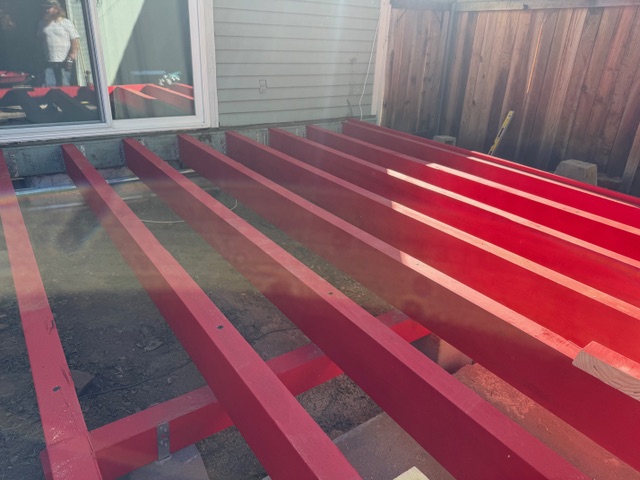
The frame in that photo is new Douglas fir on concrete pier blocks over a gravel bed, which is roughly where a low deck ends up once the old framing is past saving. Most of our repairs stop well short of a full new frame. We cut out what failed, tie fresh lumber into what held, and put the surface back down.
Joists and Ledgers: What Gets Replaced, What Stays
Ben walks every repair himself, screwdriver or awl in hand. Each joist gets probed at both ends, where it crosses the beam, and anywhere water could collect along its top edge. Sound wood pushes back against the tip. Soft wood lets it sink, and a joist that gives along more than a short stretch gets replaced instead of patched.
Sistering is the usual fix for a joist that is cracked or badly notched without being rotted: a new full-length member bolted alongside the old one so the pair shares the load. A rotted joist comes out entirely. We do not bury soft wood behind a new board and call that a repair.
The ledger gets the closest look on any deck attached to the house. If flashing was never installed above it, water has likely been running behind that board for years, and the house framing behind it may be damaged as well. A failed ledger means opening the wall surface, replacing the rotted wood, adding flashing, and through-bolting a new board into solid framing. Our main deck repair page covers the rest of what we do on attached decks.
Posts That Sank Into Sand or Soaked Up the River Bottom
Ground conditions change across Norco, and deck posts show it. On the higher, sandier ground toward Hidden Valley, water drains away fast, but loose sand lets a pier block settle or tip when it was simply set on the surface with no footing beneath it. Closer to the Santa Ana River bottom the soil holds water longer, and a wood post buried at grade in that ground wicks moisture up until its base turns to mush.
Either way, the deck above starts to sag at a corner or bounce in the middle of a span. We dig out the failed supports, look at what the soil does a foot or two down, and set new posts on proper footings with metal bases that hold the wood up off the concrete.
Settled pier blocks are far easier to deal with when they are caught early. If a door starts sticking where the deck meets the house, or a board edge has begun catching your shoe, have the supports checked before the joists above begin to rack out of line.
Boards Worked Loose by Boots From the Barn
Horse property is hard on decking. Boots carry grit and manure in from the corrals, and that grit grinds into the surface every time someone crosses it. A deck that doubles as the route between the back door and the stalls takes more traffic in a week than plenty of suburban decks take in a month.
What we find is nails backing out, screws stripping, boards cupping and splitting at their ends, and gaps packed full of debris that stays damp. We pull the worst boards, check the joist tops beneath them for rot, and refasten everything that stays with coated deck screws set just below the surface. Where only a handful of boards need replacing, we match thickness and width so the new ones sit flush with the old.
If one path across the deck takes most of the wear, a wider stair or a short landing on the barn side can spread it out. We point that out during the visit, along with any spot where a hose or a wash area is soaking the same few boards every day.
The Point Where Rebuilding Beats Patching
Repair is not always the answer, and we would rather say so at the first walk than after a second round of fixes. When rot has reached most of the joists, when the beam itself has gone soft, or when the original posts never had footings to begin with, patching just chases the next failure across the frame.
If more of the frame has to go than can stay, build the deck new.
Our rule is simple. If the structure under the boards is mostly sound, we repair it. If more of it needs replacing than can stay, a new deck on new footings will outlast a heavily patched one by years and takes less upkeep over that time. Ben lays out both options and shows you the wood that led him to his recommendation.
A rebuild also opens choices a repair cannot, like switching the surface to composite boards over new framing or adding a railing built to current code. If the deck is staying, we keep every piece that still does its job.
More Norco Work Around a Deck
Our Norco service area page lists everything we build in town. A deck repair often leads into one of these.
What Norco Owners Ask About Deck Repair
How do I know if my deck needs repair or replacement?
Probe the joists, posts and ledger with a screwdriver. Wood that lets the tip sink is soft. A few soft members usually means repair. When most of the frame is soft, or the posts were never on footings, a new deck makes more sense, and Ben will tell you which applies.
Can you replace a rotted ledger board on a balcony deck?
Yes. We support the deck temporarily, remove the failed ledger, check the house framing behind it for rot, and repair that first. The new ledger goes on with flashing above it and through-bolts into solid framing, so water sheds away from the wall instead of running behind the board.
Why is one corner of my deck sinking?
Usually a post or pier block has settled or rotted at grade. Loose, sandy ground lets a block with no footing shift, and wetter ground near the river bottom rots wood posts set into it. We dig out the failed support and set a new post on a proper footing.
My deck boards keep popping loose. What causes that?
Heavy foot traffic, grit carried in on boots, and boards drying and swelling with the seasons all work fasteners loose. We pull the worst boards, check the joists under them, and refasten with coated deck screws. Badly cupped or split boards get replaced with lumber matched to the existing size.
Does a deck repair in Norco need a permit?
It depends on the scope. Replacing structural members can bring in a permit, and when it does we prepare the paperwork, submit it and schedule the inspections. Ben tells you during the walk which way your repair falls, and the city’s animal-keeping zoning gets checked if the job grows into a rebuild.
Can you repair a deck without replacing all the boards?
Often, yes. When the framing is sound and only some boards are worn, we replace those and refasten the rest. When joists underneath need work, we lift the boards over that area, fix the framing, and relay the sound boards where they came up, adding new ones only where needed.
Free Norco Deck Repair Quote
A sagging corner or a soft board is worth a call before it spreads.
(909) 227-4193 Or send a few photos of the underside of the deck and the spot where it meets the house, and we will follow up with any questions before the visit. Send Photos of the Low CornerDeck Frames From Past Jobs
New framing, replaced joists and finished decks from around Riverside County.