Deck Resurfacing on a Frame That Earns It
Gray, splintered, cupped boards on a deck that still stands solid. New wood or composite goes down over your existing joists, after Ben has checked every one of them.
Deck Resurfacing: New Surface, Same Frame
Deck resurfacing means new decking over the frame you already have. The posts, beams, joists and ledger stay. The walking surface, the part that takes the sun and the foot traffic, gets replaced. On a deck whose structure is sound, it is the most sensible way to get a new-looking deck without paying to rebuild what still works.
The catch is the word sound. Boards wear out from the top, but frames fail from the bottom, and you cannot see a soft joist end from the deck. So before Ben quotes a resurface he gets under it and probes the joists, the ledger, the posts and the hangers. A joist or two with decay gets sistered or replaced first. If the damage is wider than that, he tells you, because new boards on a bad frame is money spent twice.
Out here, the sun wears a deck out faster than anything else. UV grays the wood and dries the top of each board until it checks and splinters, while the joists underneath sit in the shade and often stay in good shape for years longer. That mismatch is why so many Inland Empire decks are good candidates for new boards and nothing more.
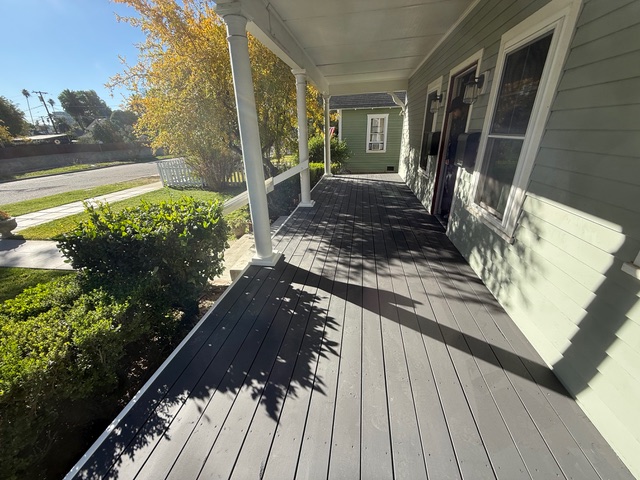
The front porch here is the finished result: gray composite boards across the whole surface, with the frame looked over before the first board went down. Ben has been doing this kind of work around Riverside for 35 years, and the frame check is the part he will not skip.
The Details Nobody Sees Once the Boards Are Down
A resurface looks finished the day the last board goes down. Whether it still looks that way in ten years depends on four things underneath.
Joist Spacing
Thick lumber can span farther than most composite. Many composite makers want joists at 16 inches on center, and closer, often 12, for diagonal layouts. We measure the existing spacing and add joists where the new boards need them.
Joist Tape
Once the old boards are off, the tops of the joists are exposed for the first time in years. A strip of butyl joist tape over each one keeps water from sitting in the screw holes, which is where the next round of rot would start.
Fasteners
Screws going into pressure-treated joists have to be corrosion-resistant, hot-dipped galvanized or stainless. Composite boards get the clips or screws their maker specifies, set at the gap the instructions call for, so the boards can move with the heat.
The Top Step
Change the board thickness and the top stair riser changes with it. Code allows only 3/8 inch of difference between risers in a flight, so we measure the stairs before choosing boards and correct the step if needed.
New Wood or Composite on the Old Frame
Most resurfacing customers ask the same question first: stay with wood or go composite. Both go on the same frame. Redwood and cedar look and smell like a real deck and take stain well, and pressure-treated is the budget-minded choice. All three need regular deck staining in Inland Empire sun if you want them to stay that color. The species trade-offs are on our wooden decks page.
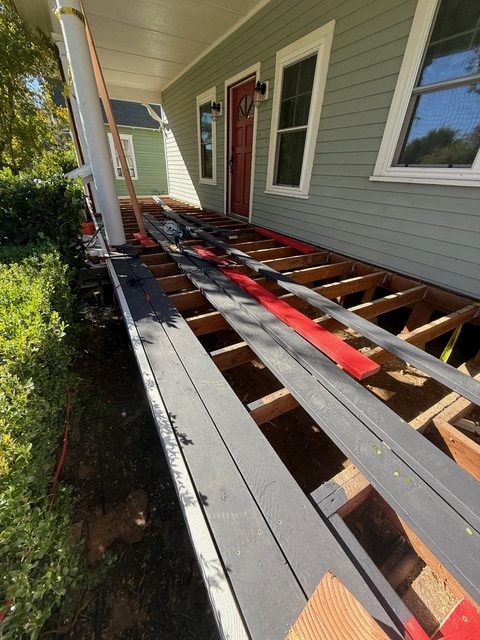
Composite skips the stain and the splinters, and the boards going down in this photo are gray composite. It does get hot under a summer afternoon sun, darker colors more than lighter ones, and it asks more of the joists underneath. The details are on the composite decks page, and Ben will give you a straight comparison for your deck at the walkthrough.
When Resurfacing Is the Wrong Job
We turn down resurfacing, or change the plan, when the frame tells us to. That usually means one of these:
- The ledger is soft, loose, or was never flashed, so water has been running into the house framing.
- Decay runs through many joists rather than a few, or the posts are rotting at the base.
- Footings have settled and the deck no longer sits level.
- The deck was built without a permit and the structure will not pass once anything structural is touched.
A couple of bad joists turn the job into deck repair plus new boards. A frame that is failing everywhere means deck replacement is the honest answer. Ben will show you what he found either way.
Railings and Stairs at Resurfacing Time
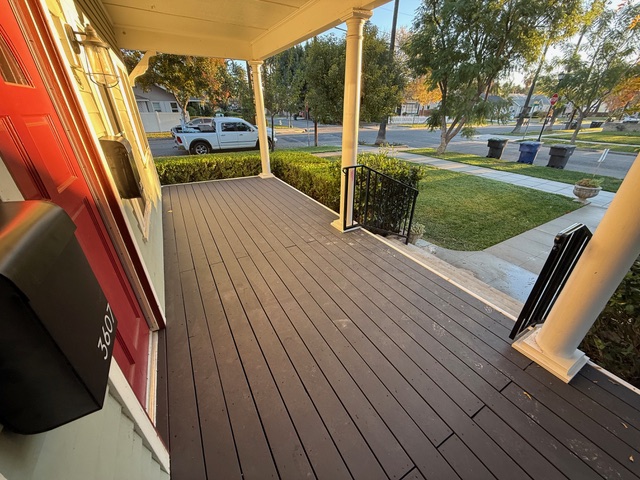
On many decks the railing posts are bolted through or alongside the old boards, so they come off for the resurface whether you planned it or not. That is a good moment to fix a railing that wobbles or sits too low. New guards on a deck more than 30 inches above grade go in at least 36 inches tall with openings that stop a 4-inch sphere, posts anchored into the framing. The second-floor deck in this photo pairs tan composite boards with a black metal railing.
Stairs get the same look, since worn treads tend to match worn decking. Read more about deck railings and deck stairs, or browse finished decks in the project gallery.

What the Code Asks of New Deck Boards
Do I need a permit to resurface my deck?
In most Inland Empire cities, replacing deck boards with similar boards over an existing frame is treated as like-for-like work and often does not need a permit. That changes when the job goes structural. Replacing joists, beams, posts or the ledger, changing the deck’s size or height, or rebuilding the guards can all bring a permit into play. Your city’s building department decides, and the answer is not the same in every city. Ben checks before the work is scheduled and pulls a permit when one is required.
Can composite decking go on joists spaced for wood boards?
Sometimes. Many composite manufacturers call for joists at 16 inches on center for boards run straight across, and closer, often 12 inches, for diagonal layouts or some thinner boards. Older wood decks were sometimes framed wider than that, because thick lumber could span farther. Composite boards are installed according to their maker’s instructions, and those instructions are what an inspector reads. If the joists are too far apart, we add joists between them before any boards go down rather than let the surface sag.
Can new deck boards go right over the old ones?
No, and we will not do it. A second layer traps water between the old boards and the new ones, hides the joists so nobody can see them rot, and adds weight the frame was never sized to carry. It also raises the deck surface, which throws off the top stair riser and can shrink the height of the guard measured from the new surface. Composite makers write their instructions for boards fastened to joists, not to other boards, and that is what an inspector checks against. The old decking comes off, the joists get checked and taped, and the new boards go down on the frame itself.
Will new deck boards change the height of my stair steps?
They can, and it is easy to miss. If the new boards are thicker or thinner than the old ones, the top step changes height while the rest of the stair stays the same. The California Residential Code allows a riser up to 7-3/4 inches and no more than 3/8 inch of difference between the tallest and shortest riser in a flight. A board swap can push the top step past that and create a trip hazard. We measure the stairs before choosing boards and adjust the stringers or treads when needed.
Do the railings have to be brought up to code when I resurface?
If the railings stay in place and are solid, resurfacing alone does not usually force a change. If the guards come off to get the boards down, or we replace them, the new guards on a deck more than 30 inches above grade must be at least 36 inches tall with openings that stop a 4-inch sphere. Since old railings are often bolted through the old decking, many resurfacing jobs end up rebuilding them anyway. Your building inspector has the final say on what has to change.
What fasteners does the code call for on new deck boards?
Any fastener going into pressure-treated lumber has to be corrosion-resistant, which in practice means hot-dipped galvanized or stainless steel, because the treatment chemicals corrode ordinary steel. Composite boards are fastened the way their manufacturer specifies, often with hidden clips or matched screws, and the inspector checks the install against those instructions. We match every fastener to the lumber it goes into and the board it holds down.
Resurfacing Decks Around Riverside and San Bernardino
New boards over a frame that has been checked and fixed first. Locally owned, building decks in the Inland Empire since 1990.
(909) 227-4193 ben.bpp@gmail.com Ask Ben for a QuoteBased in Riverside, CA, resurfacing decks and porches for homeowners across Riverside and San Bernardino counties, within about 35 miles of town.