Norco Deck Railings
On a Norco deck, the railing has two jobs. It keeps people from going over the edge, and on a lot shared with dogs, chickens or horses it often keeps animals on the right side of it too. Ben builds railings that pass California code for height and openings, bolts every post through the rim so it stays tight, and picks infill that looks at home on a ranch-style house.
Height and Spacing an Inspector Will Pass
A deck railing is a guard first and a design element second. Once a deck sits high enough off the ground that a fall would hurt someone, the railing has to meet California code for height, for strength, and for the size of its openings, and the inspector checks all of it. Second-story balcony decks draw the closest scrutiny, but plenty of low decks on sloped lots stand tall enough at their far end to need a full guard.
Height is measured from the walking surface to the top of the rail, and we build to whatever the code and your inspector require for your particular deck. Openings are where older railings most often come up short. The standard is that a 4-inch sphere cannot pass through the guard anywhere, whether between balusters, between pickets, or in the space under the bottom rail.
Many railings built decades ago used wider spacing that would fail today. When you replace a railing or add onto an older deck, we bring the new work up to current requirements. Copying what was there is how an old mistake gets built twice.
Wire Mesh, Wood Pickets or Metal Balusters
Three infill styles cover most of the railings we build, and each suits a different kind of property.

Welded wire mesh panels set inside a wood frame keep the view open while stopping small animals and toddlers from slipping through. The red deck in that photo wraps its corner in mesh panels framed with painted wood. Wood pickets are the familiar look, easy to paint or stain to match the deck boards, and simple to replace one at a time if a mower or a hoof finds them. Metal balusters set between wood rails give a slimmer line and ask for very little upkeep.
On a ranch-style house we usually keep the posts and rails in wood, cap the top with a board wide enough to set a drink on, and choose infill that fits the house instead of fighting it. Painted posts with mesh or pickets sit comfortably next to board fencing and a barn, while metal balusters suit a house with darker trim and cleaner lines. Ben brings the options to the visit and talks through how each one wears.
Dogs, Horses and What a Railing Has to Hold Back
Norco decks often look out over a corral, a riding arena or a stretch of horse trail, and the railing becomes the line between people and animals. A small dog can still squeeze between pickets spaced to code, and a deck that steps down toward a pasture needs a barrier that keeps animals off the stairs as much as it keeps people from falling off the edge.
Welded wire mesh solves most of that. Its openings are small enough to stop puppies, cats and chickens, and a panel stretched tight in its frame will not bow when a dog leans into it. Where horses can reach the deck, we keep mesh and pickets out of their range or build a top rail and post layout strong enough to take a shove, since a horse leaning on a railing puts far more force into it than a person does.
Build the rail for the biggest animal that can reach it.
Gates matter here too. If the deck opens to the yard, a self-closing gate built into the same railing keeps the dogs where you want them while still letting you walk straight out to the barn.
Handrails on the Way Down the Stairs
Deck stairs need something a deck guard does not: a handrail you can actually grip. Plenty of older stairs have a flat 2×6 on edge where the handrail ought to be, which looks tidy and gives your hand nothing to hold if your foot slips. Code calls for a graspable profile, shaped so fingers can wrap around it, running the full length of the flight, plus guards on any open side that stands high enough to need one.
We install graspable handrails on brackets or shaped rails fastened to the stair guard, continuous from the top step to the bottom. The redwood deck in the second photo has a handrail on both sides of its stair, which we suggest whenever a stair is wide or used by someone who leans on the rail.
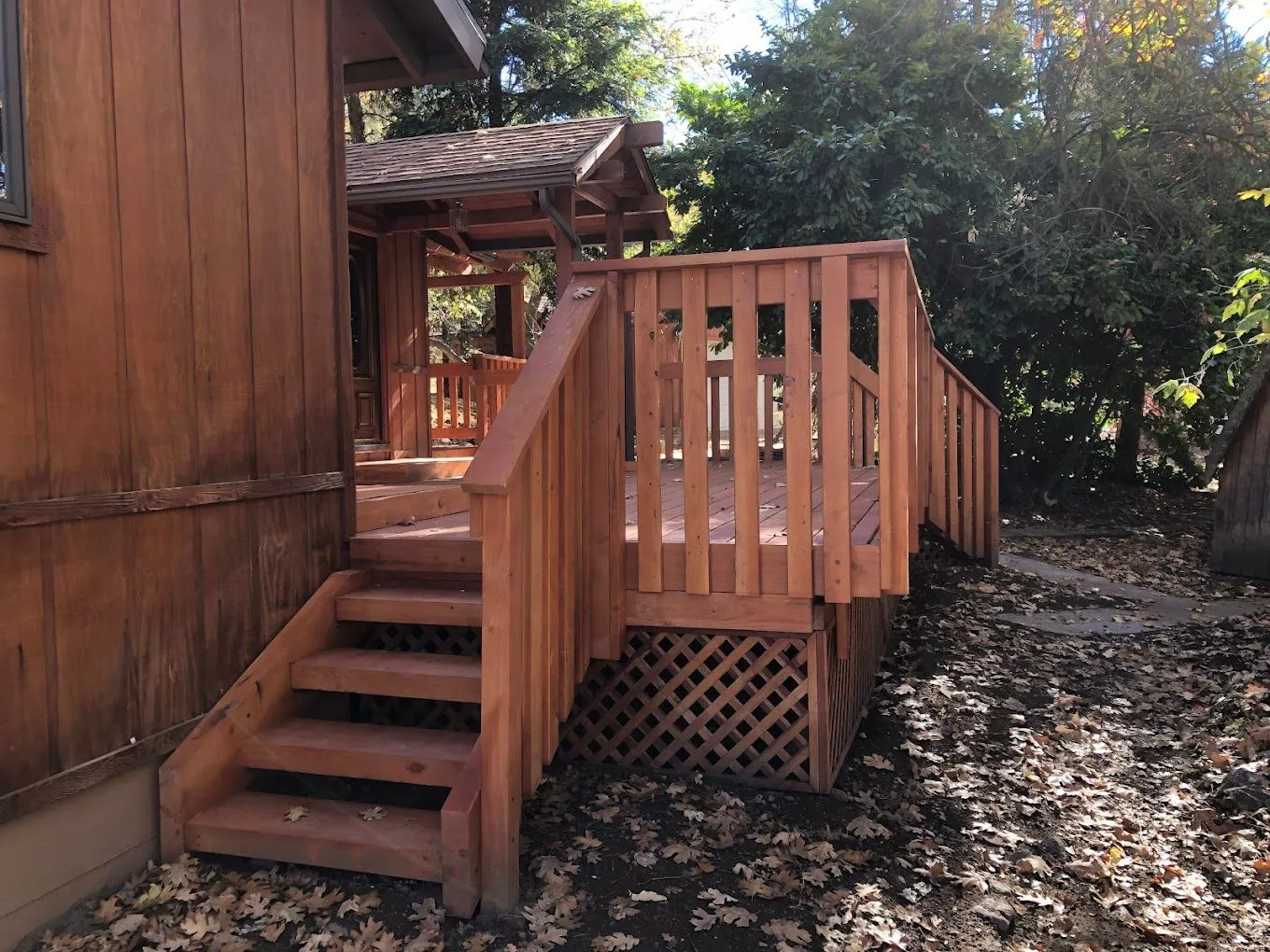
While we are at the stair, we also check the treads and risers for even height. One step that sits taller than its neighbors catches feet even with a good handrail beside it.
Why Railing Posts Work Loose at the Rim
A railing is only as strong as the posts holding it, and the post connection is where most railings fail. A post nailed or lag-screwed to the outside face of a rim joist loosens as the wood shrinks and swells through the seasons. Every lean against the rail pries on those fasteners until the post rocks back and forth in your hand.
We through-bolt railing posts to the rim joist and add blocking or tension hardware behind the rim, so the load spreads into the floor framing instead of pulling the rim away from the joist ends. On repair calls we also check whether the rim itself has rotted where the post attaches, which happens when water runs down the post and into the bolt holes. Our main deck railings page covers the rest of the hardware and materials we work with.
If your posts already move, deal with them before the rail gives way. Loose posts can usually be fixed without tearing out the whole railing, as long as the rim behind them is sound.
Norco Work That Goes With New Railings
The Norco page covers everything we do in town. Railing jobs often turn up the need for one of these.
Railing Questions Norco Owners Bring Us
How far apart can deck balusters be?
Close enough that a 4-inch sphere cannot pass between them, or through any other opening along the guard. Many older railings were built with wider gaps. When we replace or add railing, we build to current spacing so the work passes inspection and keeps small children from slipping through.
Is welded wire mesh railing strong enough for a deck?
Yes, when the panels sit in a solid wood or metal frame and the posts are bolted properly. Mesh keeps dogs, cats and small animals in, holds up when leaned on, and leaves the view open. The frame and posts carry the load, so they get built like any other guard.
Do deck stairs need a handrail?
Most do. The handrail should be graspable, meaning you can wrap your fingers around it, and run the full flight, with guards on open sides tall enough to require them. A flat board on edge does not count as graspable. We install handrails on one or both sides depending on stair width and use.
Why does my railing post wobble?
Usually it was nailed or lag-screwed to the rim joist, and seasonal shrinking and swelling loosened the fasteners. Sometimes the rim has rotted where water ran down the post. We through-bolt the post, add blocking behind the rim, and replace any rotted rim section before the railing goes back up.
What railing style works on a ranch-style house?
Painted wood posts and rails with a wide top cap usually look right, with wire mesh or wood pickets as infill. Mesh suits properties with animals and keeps the view toward the yard or pasture. Metal balusters work too if you want a slimmer line. We talk through the options on site.
Can you add a railing to a deck that never had one?
Yes, if the framing can take it. We check the rim joist and the joists behind it, add blocking where posts will land, and through-bolt each post. If the rim is soft or undersized, that gets repaired first, since the railing depends on it to hold under load.
Free Norco Railing Quote
Ask for Ben by name.
(909) 227-4193 Or send a photo of the deck edge and stairs, with a rough height from the ground, and we will get back to you with any questions before the visit. Book a Free Railing QuoteRailings and Deck Stairs From Past Jobs
Mesh, picket and baluster railings, plus stairs, from around Riverside County.