Dry Rot Repair, Cut Back to Sound Wood
Dry rot repair is part carpentry and part detective work. Ben cuts out the decayed wood, puts back treated lumber, and tracks down the water that started it, because rot only grows where wood stays wet.
Dry Rot Repair Is Really a Water Problem
The name throws people off. Dry rot is a fungus, and it can only grow in wood that stays damp for long stretches. By the time you find it the wood may feel dry, brown and cracked into little cubes that crumble in your fingers, but it got that way while it was wet. Around here that usually means a winter of rain soaking into one spot, a sprinkler head hitting the same post every morning, or a slow leak behind trim that never gets a chance to dry out.
So the first question on any dry rot repair is where the water comes from. Replace a rotted beam without answering it and you are paying to grow the same fungus in fresh lumber. Ben has been asking that question on Riverside houses since 1990. He pushes an awl into the soft area, follows the decay until the wood turns hard again, and then looks uphill from it: flashing, caulk joints, gutters, sprinklers, the grade of the soil. The repair gets planned around what he finds.
Where Dry Rot Hides on Inland Empire Houses
Most of the rot we cut out sits in a handful of predictable places. Stucco homes here carry a lot of exposed wood at their edges, and the edges are where water lands and stays.
Posts at Grade
A patio cover or porch post set straight on concrete, or buried in soil, pulls water up through its end grain. Paint can hide the damage for years. We probe the bottom of every post we look at, since that is where the fungus usually starts, and we check whether the sprinklers are hitting it.
Ledgers and Balcony Edges
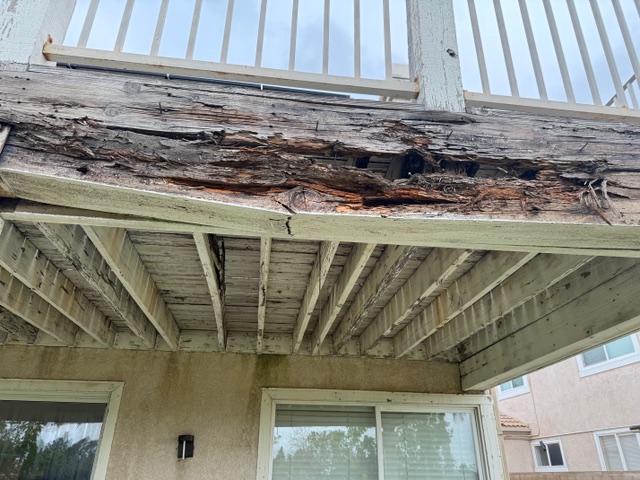
Wherever a wood frame meets the house, water can run behind the board and sit there. A walking surface whose waterproofing has failed sends water straight down into the joists, so balcony framing tends to rot from the top. The framing in the photo above is under a balcony. That balcony work has its own page: wood balconies.
Window and Door Trim
Trim goes soft at the bottom corners of a window and along the top of the head trim, where caulk has cracked or no flashing was ever installed above it. On a two-story house that means ladders, and often a section of sill or casing that has to be cut out and remade.
Fascia Ends and Rafter Tails
Roof corners take water from two directions, and a gutter that overflows soaks the face board every time it rains. Rot in the fascia usually reaches the rafter tail behind it. That job is covered on our fascia repair page.
Cutting Rot Out Versus Hardening It

Cut out and replace. This is the default for anything that holds weight: posts, beams, joists, ledgers and rafter tails. We cut back past the soft wood into clean, hard fiber, because the decay runs farther along the grain than the stain on the surface shows. The new piece is pressure-treated wherever it touches concrete or sits near the ground, and redwood or cedar where it shows. It gets joined to sound wood with proper hardware or a splice, then flashed or caulked so water sheds off it.
Consolidate and fill. On trim that carries no load, like a sill nose, a decorative bracket, or a molded casing that would be hard to match, a small pocket of rot can be dug out, soaked with a liquid epoxy consolidant that hardens what is left, and rebuilt with epoxy filler before it is shaped and painted. It saves original woodwork on older homes. Once the rot runs deep or wide it is the wrong tool, and we never use it on anything structural.
Ladders on a two-story wall like this one usually mean trim work, casings and sills that took water at the corners. Ben shows you the soft wood before he quotes it, so you can see for yourself why a piece is being saved or replaced.
How We Take Rot Out of a House
Find the Water
Before any cutting, Ben traces the decay back to its source and writes the fix into the quote: a flashing detail, a sprinkler to redirect, a gutter that overflows, soil piled against a post. If the source is something we do not repair ourselves, he says so and tells you what kind of trade to call.
Open Up and Cut Back
Paint, trim or stucco comes off until the decay ends. Rot is almost always bigger than it looks from outside, so the quote spells out what happens if the soft wood keeps going. Structural members get a permit when the city requires one, and Ben pulls it.
Rebuild and Seal
New wood goes in. Field-cut ends of treated lumber get a brushed-on preservative, everything gets primed, and joints are caulked and flashed so the next rain runs off. Paint goes on last, so new wood is never left bare through a season.
Few details head off more dry rot repair than the base under a post. A metal post base holds the end grain up off the concrete, so rain and sprinkler water drain away from the bottom of the post instead of soaking in where the fungus usually starts.
When we replace a rotted post, that is usually how the new one goes back: on a standoff base, anchored to the footing, painted before it is set. Ben would rather spend the extra time on the base than come back in a few winters to cut out the same post.

When Rot Is Part of a Bigger Job
Dry rot rarely stays in one board. Depending on where it went, the repair can grow into one of these, and the rest of what we build is on our services page.
Wood Replacement
When rot has taken a beam, joist or post under a patio cover, porch or balcony, the member is replaced at full size and connected with the hardware the load calls for.
Structural wood replacementWood Exterior Repair
Siding, trim and soffits rebuilt to match the rest of the house once the decayed sections have been cut away.
Exterior wood repairDeck Repair
Rotted joist ends, ledgers and post bases on a deck that is still sound enough to keep.
Deck repairWhat the Building Code Says About Rotted Wood
Does dry rot repair need a building permit in California?
It depends on what the rotted wood was doing. Replacing a piece of window trim, a section of fascia or a few deck boards with the same material is usually treated as maintenance and does not need a permit in most Inland Empire cities. Replacing a post, beam, joist, ledger or rafter is structural work, and most building departments want a permit and an inspection before it gets covered up. Rules differ from city to city, and your city’s building department makes the final call. Ben tells you during the walkthrough whether your repair needs one, and if it does, he pulls it.
What does California code say about wood near the ground or on concrete?
The residential code has a section, R317, on protecting wood from decay. In short, wood that sits close to the soil, or rests on concrete exposed to the weather, has to be pressure-treated or a naturally decay-resistant wood such as redwood or cedar heartwood. Much of the dry rot we find is in older work where untreated lumber was set right against dirt or concrete. When we replace it, the new wood meets that section, and we keep soil and mulch pulled back from it.
What does code expect at the bottom of a wood post?
A wood post exposed to the weather has to be decay-resistant or pressure-treated, and the code also addresses how it meets its support, including metal bases that hold the end grain up off the concrete. A post also has to be anchored so it cannot kick out or lift, which is the other job a metal post base does. When we replace a rotted post, we set the new one on a base that keeps it off the concrete and fasten it to the footing, so water drains away from the end grain.
Can rotted wood be filled with epoxy instead of replaced?
On trim that carries no weight, yes. A small pocket of rot in a sill nose or a molded casing can be cleaned out, hardened with a liquid epoxy consolidant and rebuilt with epoxy filler. Filler does not give strength back to a post, beam, joist or ledger, and an inspector looking at a structural repair expects sound wood and proper connections. Filler over rot in a structural member also hides the problem from the next person who looks at it. We use epoxy only on trim and decorative pieces, and only when the rot is shallow.
What has to happen to the cut ends of pressure-treated lumber?
Pressure treatment does not always reach the center of a board. When treated lumber is cut, notched or drilled on site, the code calls for those fresh surfaces to be treated in the field with a brush-on preservative. Skipping that step leaves untreated wood exposed at the end grain, right where water collects. We treat every cut end on posts, joists and ledgers before they go in, and on painted work we prime every face of the new wood so moisture cannot get in through the back or the ends.
My pest inspection report lists fungus damage. Can you repair it?
Yes. Pest inspection reports in California often list fungus damage, which is dry rot, along with any termite findings, and the two get handled differently. BPP repairs and replaces the decayed wood and fixes the moisture problem that caused it. We do not do pest treatment, so if the report also shows termites, a licensed pest company treats those first and then we rebuild the wood. If you are in escrow, ask whoever ordered the report how they want the repair documented, and we will work to that.
Rot Repair Across Riverside and San Bernardino Counties
Ben has been cutting rot out of Inland Empire houses since 1990. Call him, describe where the wood went soft, and he will tell you what it takes to fix it and keep it fixed.
(909) 227-4193 ben.bpp@gmail.com Tell Ben Where It Is SoftBased in Riverside, CA, repairing dry rot for homeowners across Riverside and San Bernardino counties, within about 35 miles of town.