In a Menifee master-planned community, a room addition adds space to your house, while an ADU adds a separate unit you can house family in or rent. The decision turns on lot size, your HOA’s architectural rules, the graded-fill soils report, and whether you want connected space or independent space. Both run through the Riverside County permit process.
The most common call I get from Menifee homeowners in Audie Murphy Ranch, Heritage Lake, and Menifee Lakes starts the same way: “We love the house, we love the community, we just need more room, and selling to buy again does not make sense right now.” They are right. With the rate most of them locked in and what homes cost today, building on almost always beats moving. The real question is which kind of building on, a room addition or an accessory dwelling unit, and in a master-planned community that decision has a few local twists most generic advice skips.
What a room addition gives you
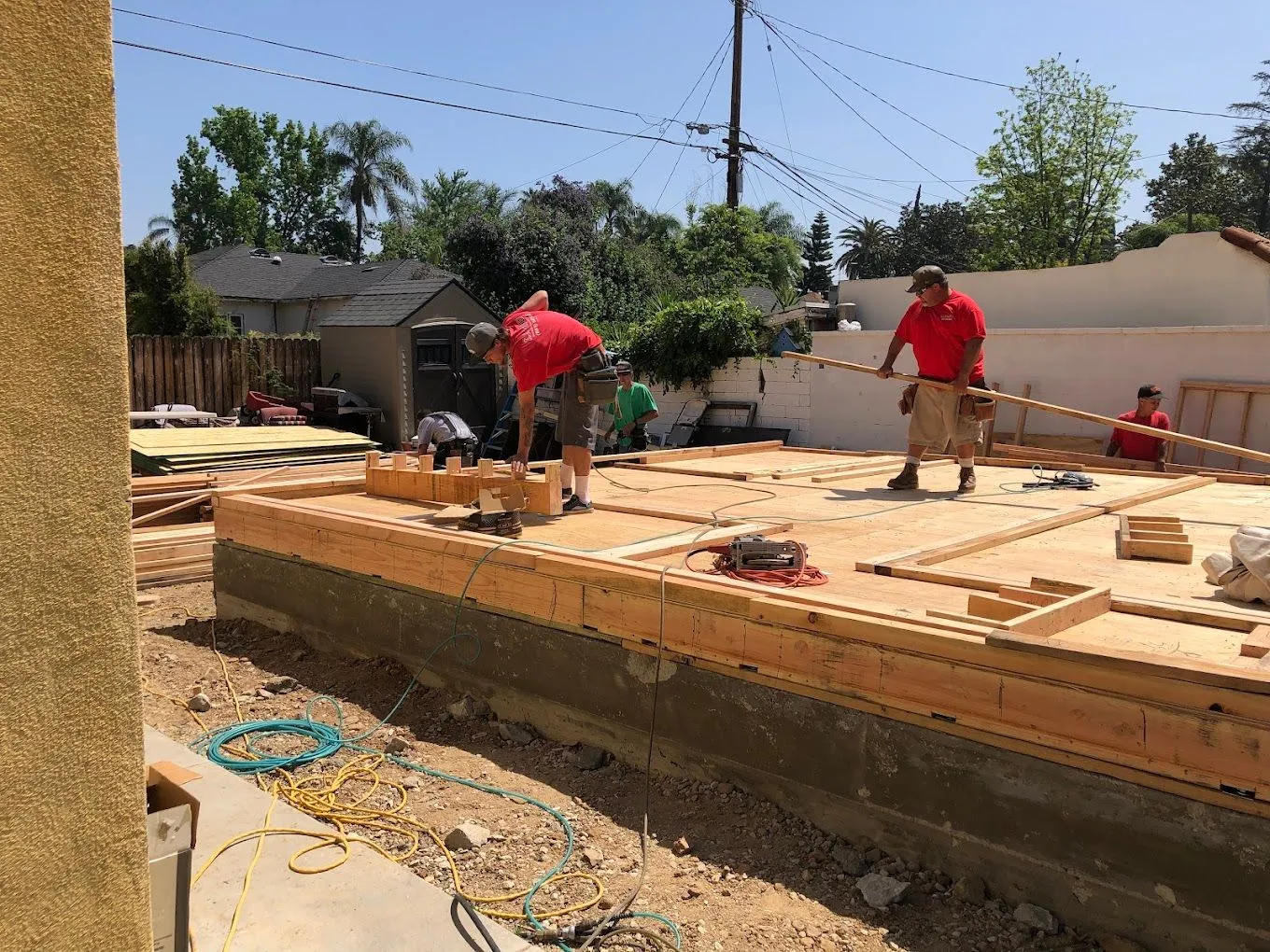
A room addition is new square footage attached to your existing home: a bigger primary suite, a fifth bedroom, a real home office, an expanded great room. It shares walls, roof, and systems with the house, so it reads as part of the home rather than a separate building. For a Menifee family that mostly needs the house itself to be bigger, this is usually the answer. Plan on roughly 6 to 14 weeks of build time and a budget that typically runs $90,000 to $200,000 depending on size, foundation work, and how much the new space ties into existing plumbing and electrical.
The matching is where experience matters most on a newer tract home. Your builder’s stucco texture, roofline, and window package are recent and specific, and an addition that does not match them sticks out from the street. After 35 years across the Inland Empire, matching a current builder package closely is exactly the kind of detail we sweat so the new wing looks original.
What an ADU gives you
An accessory dwelling unit is a separate, self-contained home on your lot, attached or detached, with its own kitchen, bath, and entrance. It is the right move when you need independent space rather than more connected space: an aging parent who wants their own front door, an adult child priced out of their own place, or a long-term rental that helps carry the mortgage. California has loosened ADU rules statewide, and the larger lots in Audie Murphy Ranch and the older Sun City parcels often have real room. Budget roughly 4 to 8 months including design and permitting, and $150,000 to $350,000 depending on size and whether it is detached.
The Menifee twist: HOA architectural review
This is the part generic ADU and addition advice leaves out. Most of Menifee’s master-planned communities have an HOA with an architectural review committee, and that approval is separate from, and on top of, the county building permit. Your plans have to satisfy both. The HOA cares about how the addition or unit looks from the street and from the neighbors, the building department cares about how it is built. We prepare both submittals, and we read your specific community’s design guidelines before drawing anything, because finding out after the fact that your ADU placement violates a setback the HOA enforces is an expensive lesson.
The other Menifee twist: graded fill and the soils report
Newer Menifee tracts sit on engineered fill that the builder graded and compacted to a spec. When you attach an addition or set an ADU foundation, the new footings have to be designed against that same soils data so the new structure settles at the same rate as the existing house. The county will typically want a soils report before it permits the foundation. Skip that step and you risk a differential-settlement crack running up the drywall right where new meets old. We build that tie-in deliberately: matching slab elevation so floors run level through the doorway, dowelling the new footing into the old where the engineer calls for it, and flashing the connection so water never finds the seam.
The money question: which one pencils out
Cost per square foot usually favors a room addition, because it shares the existing home’s walls, roof, and systems, while an ADU is a complete standalone home with its own kitchen, bath, HVAC, and utility connections and therefore carries every one of those costs on its own. But the ADU has something the addition does not: it can generate income. A long-term rental unit can offset a real chunk of the mortgage, and in a city where rents have climbed the way Menifee’s have, that changes the math over a five or ten year horizon. A room addition, by contrast, adds resale value and daily livability but does not pay you back month to month. So the right financial answer depends less on the sticker price and more on what you need the space to do: house family, earn rent, or simply make the home you already own big enough.
Utilities are the part people overlook on an ADU. A separate unit may need its own electrical subpanel, its own water and sewer taps, and sometimes an upgrade to the main service, and on a Menifee tract lot the runs from the house to a detached unit at the back of the yard add up. We scope all of that before we quote, because an ADU number that ignores the utility connections is a number that grows once the trenching starts.
How to choose
Start with what you actually need. If the answer is “our house needs to be bigger,” it is a room addition. If the answer is “we need a separate place for someone to live,” it is an ADU. Then check the lot: an ADU needs room to sit with proper setbacks, and not every Menifee lot has it. Then check the HOA guidelines and the soils picture. By the time we have walked your property and looked at all four, the right answer is usually obvious, and I will tell you straight which one fits your home, your community, and your budget.
Common Questions
Can I build an ADU in an Audie Murphy Ranch or Heritage Lake home?
Often yes, but two approvals apply: the Riverside County permit and your HOA’s architectural review. We check lot size, setbacks, and the community design guidelines before drawing anything, then prepare both submittals.
What does a Menifee addition or ADU cost?
Room additions typically run $90,000 to $200,000. ADUs run $150,000 to $350,000 depending on size and whether they are detached. Call (909) 227-4193 for a written, line-itemed quote after an in-home walkthrough.
How long does the project take?
A room addition runs roughly 6 to 14 weeks of build time. A full ADU runs 4 to 8 months once you count design, the HOA review, and the county permit. Graded-fill foundation work and weather can shift the schedule, and we build that into the timeline honestly.
Why does my Menifee tract need a soils report for an addition?
Newer Menifee tracts sit on engineered fill, and the county wants the new footings designed against that soils data so the addition settles at the same rate as your house. It prevents the differential-settlement cracks you see when old and new foundations move differently.
Will the new space match my existing home?
That is the whole point. We match rooflines, stucco texture, window styles, and finishes so the addition reads as original construction. On a newer Menifee tract home that means matching a recent builder package closely.
Can I rent out an ADU in Menifee?
Generally yes, and it is one of the main reasons owners build them. A long-term rental unit can offset a meaningful share of the mortgage, which changes the math versus a room addition that adds value but does not pay you back monthly. Rules on short-term versus long-term rentals can vary, so we confirm the current requirements and your HOA’s position before you plan around rental income.
Thinking About Adding On in Menifee?
Free in-home consultation with Ben Pickering. 35 years of Inland Empire craftsmanship.
Request a Free Quote Call (909) 227-4193Read more on our Menifee Home Additions page, see what else we build across Menifee, or tell us about your project.