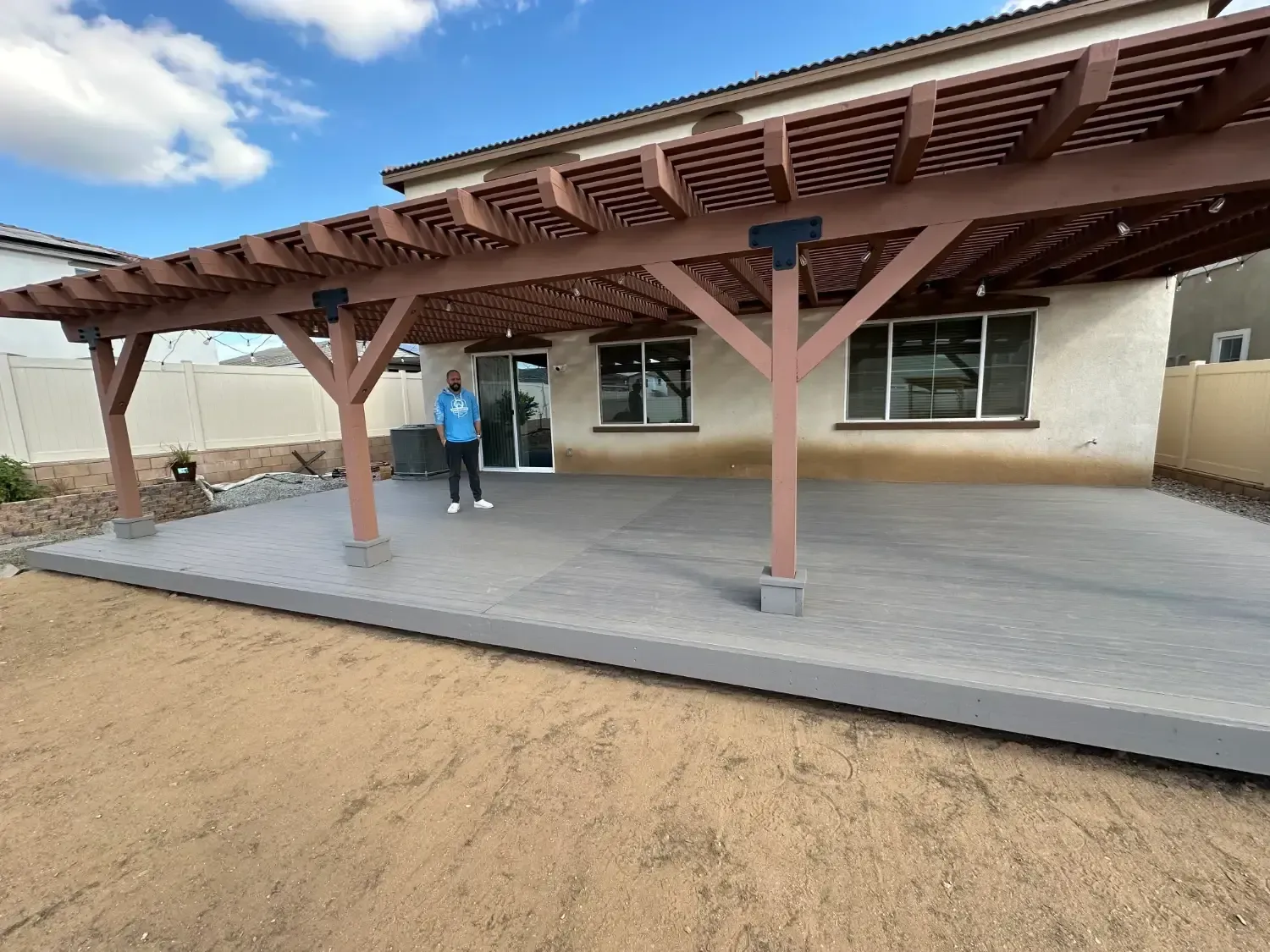
Most Corona deck projects need a City of Corona building permit if the deck is over 30 inches above grade or attached to the house. If your home is in an HOA, you usually need architectural approval too, and that approval is almost always the longest part of the timeline, not the building. Plan for two to six weeks of paperwork before a single board goes down.
A deck is one of the most satisfying things I build. It is also the project where homeowners get surprised most often, because the holdup is rarely the carpentry. It is the paperwork. After 35 years of building decks across the Inland Empire, I can tell you exactly where the days go and how to keep your project moving. Here is the whole picture, start to finish.
First question: does your deck even need a permit?
The City of Corona follows the California Residential Code, and the short version is this. A deck that sits more than 30 inches above the ground, or any deck attached to the house, needs a building permit. A small, freestanding, ground-level platform often does not. When in doubt, assume you need one, because the cost of skipping a required permit shows up later when you try to sell the house and the buyer’s inspector flags an unpermitted structure.
I pull the permit for you. I draw up the plans, submit them, and meet the inspector at framing and final. You do not stand in line at the counter. That connection to the local building department is part of what 35 years in one region buys you.
The HOA reality in Corona
Here is the part most people underestimate. A large share of Corona homes sit inside an HOA, and your HOA almost certainly has an architectural review committee with an opinion about your deck.
They will want to see your height, footprint, materials, color, and railing style. Some HOAs in Corona restrict deck stain colors to an approved palette. Some require that the deck not be visible above the fence line from the street. A few cap how far a structure can extend into the rear yard setback. None of this is a dealbreaker, but it means submitting a packet and waiting for a committee that may only meet once a month.
My advice: start the HOA submittal the day you decide to build, before you finalize materials. If the committee meets monthly and your packet misses the deadline by two days, that is a four-week delay before I can even file the city permit. Run the two approvals as close to parallel as the rules allow.
What actually takes the longest
People assume the build is the slow part. It is not. Here is roughly where a Corona deck timeline spends its days.
HOA architectural review: two to six weeks. Driven entirely by when the committee meets and whether your first packet is complete. This is usually the single biggest chunk.
City permit review: one to three weeks. Faster for a straightforward attached deck, longer if the plans need engineering for height or hillside conditions.
Actual construction: one to two weeks for a typical residential deck once we break ground. Footings, ledger, framing, decking, railing. The carpentry is the predictable part.
So a deck that takes a week to build can easily take six to ten weeks from handshake to finished, and almost all of that gap is approvals. The way to compress it is to start the paperwork early, which is exactly what I help my Corona clients do.
Choosing materials for Corona heat
Corona summers are hot and dry, and that matters for what you build with. A few honest notes from the field.
Pressure-treated lumber is the workhorse for the structure underneath. It is the most budget-friendly choice for joists and posts and holds up well when detailed correctly.
Redwood and cedar give you a beautiful natural deck surface that handles the dry inland climate gracefully, though they need a quality stain and a re-coat every few years to keep the color and fight UV checking.
Composite decking costs more up front but shrugs off the sun and skips the staining cycle, which a lot of my busier Corona homeowners decide is worth it. One caution: dark composite gets genuinely hot underfoot in July, so I steer clients toward lighter tones for surfaces that catch full afternoon sun.
Common Questions
Do I need a permit to build a deck in Corona?
If the deck is more than 30 inches above grade or attached to the house, yes, the City of Corona requires a building permit. Low freestanding platforms often do not. I pull the permit and meet the inspector for you.
How long does HOA approval take for a Corona deck?
Usually two to six weeks, driven by how often the architectural committee meets and whether your first submittal packet is complete. Starting it early is the single best way to keep your project on schedule.
What is the best decking material for Corona heat?
Pressure-treated lumber for the structure, redwood or cedar for a natural wood surface that takes the dry climate well, and composite if you want to skip the staining cycle. For full-sun surfaces, lighter composite tones stay cooler underfoot.
Can I build the deck first and get it approved later?
No, and I would not let you. Building before the city permit and HOA approval risks a stop-work order, fines, and an order to tear it out. Worse, an unpermitted deck becomes a problem when you sell. We do it right from the start.
How much does a wood deck cost in Corona?
It depends on size, height, and material, but I give every Corona homeowner a written quote with itemized labor and materials after walking the yard. Call me and I will get you a real number within 48 hours.
Ready for Your Corona Deck Project?
Call Ben directly. Free in-home consultation, written quote within 48 hours.
(909) 227-4193 Request a Free Quote OnlineBrowse our deck and wood project gallery, see our deck construction work, or meet Ben and the crew.