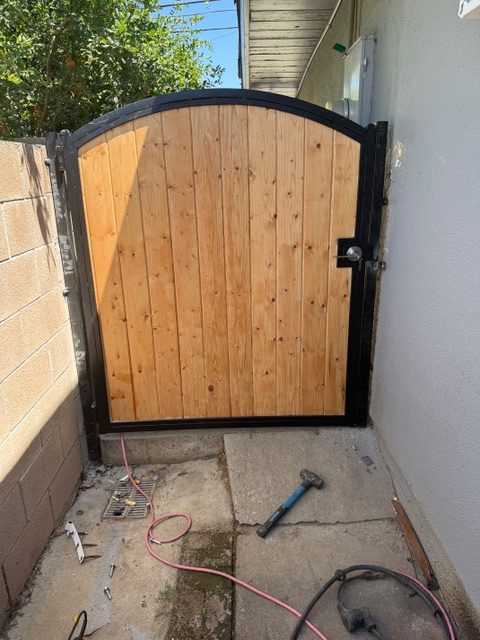
California Building Code Section 305 requires pool fences to be at least 60 inches tall, have no more than 4 inches between vertical members near the bottom, have no climbable horizontal rails on the inside surface, and have self-closing self-latching gate hardware with the latch at least 54 inches above grade. Murrieta inspectors check these carefully.
Why Pool Fences Are Regulated Specifically
California Building Code Section 305 was adopted to reduce drowning deaths in residential swimming pools. The CDC reports that pool fencing reduces childhood drowning risk by 83 percent compared to unfenced pools. The code is a minimum life-safety standard, not a guideline.
In Murrieta, City inspectors check pool fences at install time and again any time a new homeowner opens a permit (sale, addition, or major renovation). Failed inspection delays pool-cover removal at season opening and creates resale complications.
Pool fences are also a major factor in homeowner insurance pricing. Uncovered or non-compliant pool fences can drive premium increases of 15-30 percent or trigger policy refusals. Compliance is not just code; it is insurance economics.
The Five Critical CBC 305 Requirements
(1) Minimum height 60 inches above ground. Measured from the outside surface of the fence. Lower is non-compliant. Higher is fine.
(2) Maximum 4-inch gap between vertical members at the bottom. A 4-inch ball must not pass through. This is the same dimension as residential building code for guardrails: small enough that toddlers cannot squeeze through.
(3) No horizontal rails or climbing aids on the pool-side surface. Horizontal rails on the inside become ladders for small children. Code requires either fully smooth inside surfaces or rails on the outside only.
(4) Self-closing self-latching gate hardware. The gate must close on its own from any opening angle and the latch must engage automatically. The latch must be at least 54 inches above grade, high enough that small children cannot reach it.
(5) No openings within 18 inches of the latch. A child should not be able to reach through the fence to operate the latch from the outside.
What Fence Materials Meet CBC 305
Tubular steel and wrought iron meet code easily: vertical pickets at 4-inch maximum spacing, smooth inside surfaces, gates with proper hardware. Most Murrieta pool fences use this material because it meets code, looks intentional, and lasts 25-40 years.
Vinyl pool fencing also meets code when designed for pool use specifically. Standard vinyl privacy fencing usually has horizontal rails at intermediate heights, non-compliant unless the rails sit on the outside only.
Wood pool fencing meets code if designed correctly: vertical pickets only on the inside, no climbable horizontal rails. Cedar and redwood survive Murrieta’s UV with periodic sealing. Pressure-treated pine works but ages faster in the dry heat.
Mesh removable pool fencing (the brown plastic-coated kind) meets CBC 305 and is popular for homeowners who want the fence to disappear when the pool is not in use. Removable but lockable. Often combined with a permanent perimeter fence for layered security.
Common Murrieta Pool Fence Failures
Latch height. Too many residential pool gates have latches at thumb-reach height (38-44 inches). Code requires 54+ inches. Fix is replacing the latch hardware.
Self-closing failure. Hinges weaken over time. A pool gate that does not close on its own from any angle is an automatic inspection failure. We replace hinges as part of any fence inspection or installation.
Climbable horizontal rails. Many vinyl and chain-link fences have horizontal stiffening rails at 30-36 inches off the ground, a perfect step height for a 3-year-old. Code violation. Fix requires either replacing the fence or installing climbable-rail covers (rare and ugly).
Gap erosion. Older wood pool fences develop gaps over 4 inches at the bottom from soil settling and post movement. Inspection failure. Fix requires reinforcing the bottom rail or installing kick plates.
When You Need a Permit
City of Murrieta requires a permit for any pool fence install or substantial repair. We pull the permit, build to spec, and walk the inspector through at final. Pool fence permits are a small line typically.
Replacement of an existing compliant fence in-kind generally does not require a permit. New installs, height changes, gate location changes, and any work that crosses property lines require permits.
Common Questions
How long does a Murrieta pool fence install take?
Standard 100-180 linear feet of pool fence install: 4-6 days plus inspection. Combination block-and-fence: 2-4 weeks depending on retaining wall scope.
What does a Murrieta pool fence cost?
Priced per linear foot for code-compliant pool fence with proper gate hardware. A typical 150 linear foot pool fence install is a mid four-figure project, set by run length and gate count.
Will my Murrieta HOA approve the pool fence?
Most Murrieta HOAs have approved pool-fence styles. Tubular steel is universally accepted. Vinyl is usually approved. Wood with vertical pickets is typically approved.
Can you replace just the gate without redoing the whole fence?
Yes. Gate-only replacement is common. Old self-closing hardware fails before the rest of the fence does. A code-compliant gate replacement is a modest standalone job.
Do you handle the inspection?
Yes. We schedule the City of Murrieta inspector, walk the install, and address any callouts on the spot. Final sign-off included in the project.
Ready for Your Murrieta Fencing Project?
Free in-home consultation with Ben Pickering. 35 years of Inland Empire craftsmanship.
Get Free Estimate Call (909) 227-4193Read more on our Murrieta Fence Construction page, see our project gallery, or learn about Ben and the team.