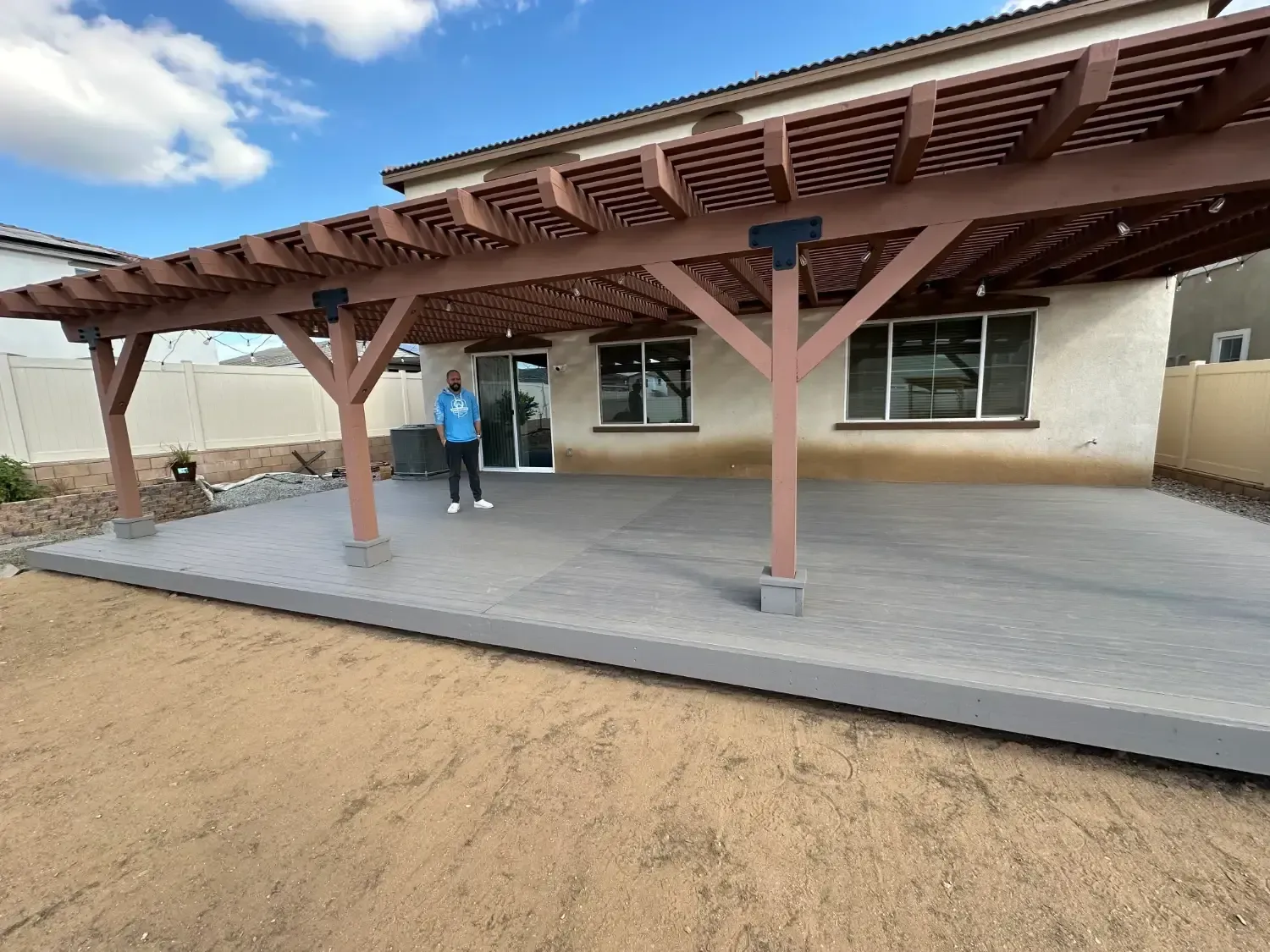
Chino Hills is named for its hills, and the best backyards sit on a grade reaching toward a canyon or city-light view. A hillside view deck is not a flat-lot deck stretched to fit: it needs taller posts, deeper footings into stable soil, bracing sized for the height and wind, and drainage that sheds runoff away from the footings. Add a code-height railing built as a real structure, plus city permits and HOA review, and you have a deck that holds solid for decades.
The single fact that shapes every deck we build in Chino Hills is right there in the city’s name. This is a place of rolling hills, and its most sought-after backyards sit on the slopes climbing toward the ridgelines and Chino Hills State Park. A deck out there is almost always reaching for a view over a grade rather than resting on level ground. That changes the whole build. A hillside view deck is a structure engineered for the terrain from the footings up, not a standard low-deck detail dropped onto a slope, and understanding the difference is what separates a deck that lasts from one that develops problems in a decade.
Why a Hillside Deck Is a Different Animal
On a flat lot, a deck sits close to the ground on short posts and simple footings. On a Chino Hills view lot, the deck often stands well off the grade, cantilevering or reaching out toward the outlook. That elevation is what makes the view possible, and it is also what raises the structural stakes. Everything about the framing has to account for the height: the load paths, the bracing, the connection to the house, and the way the whole structure resists both gravity and the sideways forces that come with a tall deck.
Get it right and you have a deck that feels rock-solid underfoot and holds for the life of the home. Get it wrong, and you get a deck that feels bouncy, develops movement at the connections, or worse. This is exactly the kind of work Ben Pickering has done across the Inland Empire for 35 years, and it is not a place for guesswork.
The exposure is part of the engineering too. Most Chino Hills view decks face the afternoon sun over the valley, and that ultraviolet load punishes bargain decking, cheap fasteners, and thin finishes year after year. We spec the boards and hardware for the actual exposure, whether that is a quality composite that will not chalk out after five summers or a real wood deck sealed on a maintenance schedule, and we detail the ledger flashing so the connection to the house stays dry through the wet winters that follow those long dry seasons.
Taller Posts, Deeper Footings
A hillside view deck needs taller posts than a flat-lot deck, and taller posts need deeper, more substantial footings set into stable soil to carry the load and resist overturning. We do not guess at footing depth on a slope; the engineering dictates it based on the height, the soil, and the loads the deck will see. On the steeper Chino Hills lots, the footings go well below the surface into soil that will hold, because a footing that sits in loose fill near the top of a slope is a footing waiting to move.
The bracing matters just as much. A tall deck has to resist lateral load, the sideways push from people moving on it and from wind, and we design the bracing for the actual height rather than reaching for a standard detail. On the more exposed hillside lots, the afternoon wind funneling up out of the valley is a real force, and we account for it in how the structure is tied down. These are the calculations most homeowners never see, and they are the whole ballgame on a hillside deck.
Drainage: The Slow Killer
Water is what quietly destroys hillside decks over time, and it works on the footings from below. On a graded Chino Hills lot, wet-season runoff naturally moves downhill, and if that water is allowed to pool around or run past the footings, it softens the soil holding them and undermines the whole structure over the years. We plan the drainage so runoff sheds away from the footings instead of soaking the ground beneath them.
This is invisible work that pays off a decade later. A deck built without drainage planning can look perfect for years and then start to move as the soil under one footing gives way. A deck built with the water directed away from the footings holds its position season after season. On a slope, drainage is not an afterthought; it is part of the structural design.
The Railing Is Structure, Not Trim
On an elevated Chino Hills deck, the railing is a genuine safety element and we build it as one. The city enforces the California guard requirement, so any deck more than 30 inches off grade needs a railing tall enough with baluster spacing tight enough that a small child cannot slip through. Just as important, the railing posts have to be anchored to resist a real lateral push, not simply screwed to the rim board where they can work loose.
On a high deck, a railing that fails is a serious matter, so we treat the railing as part of the structure from the framing stage, blocking and anchoring the posts properly rather than bolting them on at the end. It is the kind of detail that does not show in a photo but decides whether the deck is genuinely safe at height.
Permits, HOA, and Reading the Lot
Chino Hills decks require a City of Chino Hills permit for any deck over 30 inches off the ground, and we coordinate the structural engineering the hillside work demands, then manage the footing, framing, and final inspections. In the HOA neighborhoods, particularly the gated tracts near Vellano and Rincon and the communities off Pomona Rincon Road, we build the architectural review into the timeline, preparing the drawings and material specs those boards expect alongside the city plans so both approvals move together.
Above all, Ben walks the actual slope before he quotes a Chino Hills deck. The only honest way to price a hillside build is to stand on the lot and read it, the grade, the soil, the crew access around the side of the house, and how the deck will sit against the home’s lines. A hillside deck quoted off a photo is a guess; a hillside deck quoted off the lot is a plan. Read more on our Chino Hills deck construction page.
Common Questions
How do you build decks on Chino Hills’ steep view lots?
With engineering that matches the lot. A view deck reaching over a grade needs taller posts, deeper footings into stable soil, and bracing designed for the height and the lateral load, not a flat-yard detail stretched to fit. We plan drainage away from the footings, and Ben walks the slope himself before quoting.
Why do hillside deck footings need to go so deep?
Taller posts carry more load and more overturning force, and the footings have to reach stable soil to hold them. A footing that sits in loose fill near the top of a slope can move over time. The engineering dictates the depth based on the height, soil, and loads, not a standard number.
How does drainage affect a hillside deck?
Wet-season runoff on a slope can soften the soil around the footings and undermine the structure over the years. We plan the drainage so water sheds away from the footings instead of soaking the ground beneath them. It is invisible work that decides whether the deck holds its position a decade later.
Are your Chino Hills deck railings built to code?
Yes, and we treat the railing as a structural element. Chino Hills enforces the California guard requirement, so any deck more than 30 inches off grade needs a railing tall enough with baluster spacing tight enough that a small child cannot slip through, and posts anchored to resist a real lateral push rather than just screwed to the rim.
How long does a hillside deck build take?
Elevated hillside decks with deep footings run five to eight weeks of build time. City permits and HOA architectural review add several weeks up front before construction starts, and we fold that lead time into the schedule we hand you.
Wood or composite for a full-sun Chino Hills view deck?
Both can work, and the exposure decides more than fashion does. A west-facing ridgeline deck takes brutal afternoon sun, so a quality composite holds its color and surface with almost no upkeep, while real wood looks and feels warmer but needs sealing on a schedule to survive that ultraviolet load. Ben walks you through the tradeoff on the lot so the choice fits how you will actually use and maintain the deck.
Ready for Your Chino Hills View Deck?
Free in-home consultation with Ben Pickering. 35 years of Inland Empire craftsmanship.
Get Free Quote Call (909) 227-4193Read more on our Chino Hills Deck Construction page, see our work in Chino Hills, browse the project gallery, or learn about Ben and the team.